Verification Artifacts
All figures are generated from live TruthOS Unified E2E executions. No simulations. No placeholders. Independent verification supported.
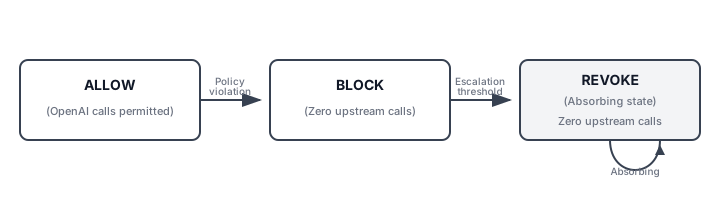
1. Policy State Machine
Literal rendering of the FSM enforced by TruthOS. ALLOW → BLOCK → REVOKE (absorbing state). Isomorphic to enforced runtime logic.
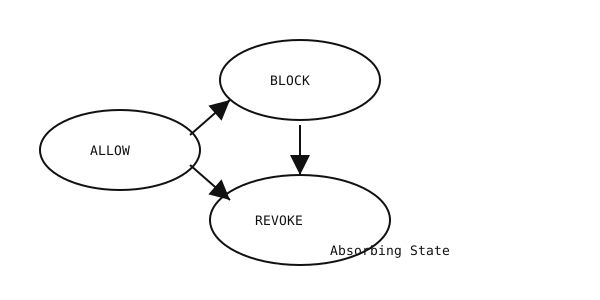
2. Policy FSM (Ellipse View)
Alternative visualization of the policy finite state machine showing ALLOW, BLOCK, and REVOKE as state ellipses with transition arrows. REVOKE is the absorbing state.
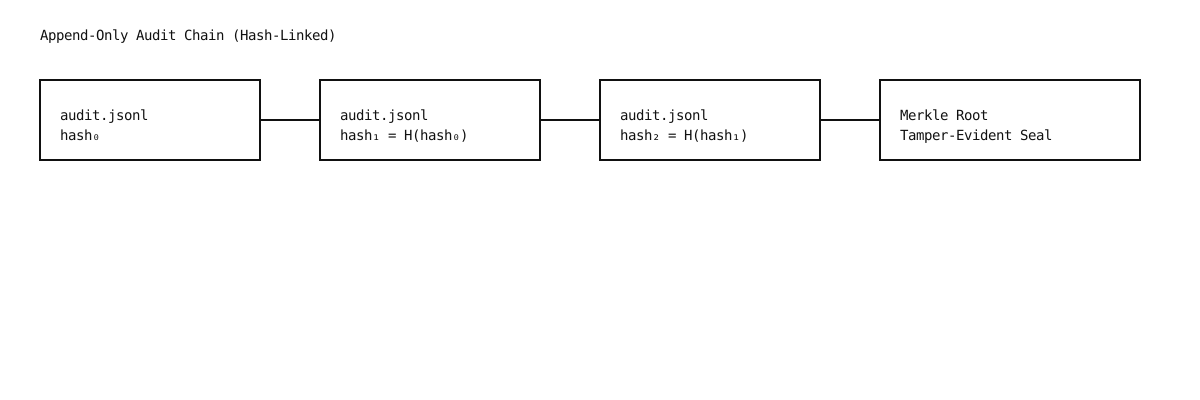
3. Audit Hash Chain
Real SHA-256 hash-chained audit trail from audit.jsonl. Each entry contains cryptographic linkage to previous entry, sealed with a Merkle root.
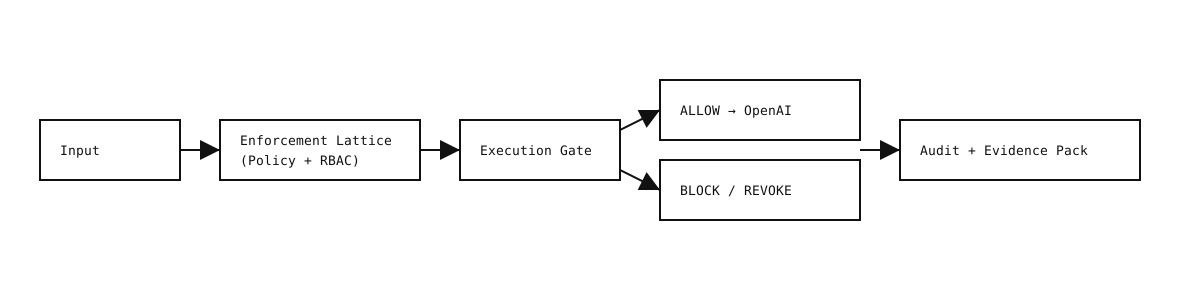
4. Enforcement Lattice Execution Flow
Input flows through the Enforcement Lattice (Policy + RBAC), then the Execution Gate determines ALLOW (upstream call permitted) or BLOCK/REVOKE (zero upstream calls). All paths terminate in Audit + Evidence Pack.
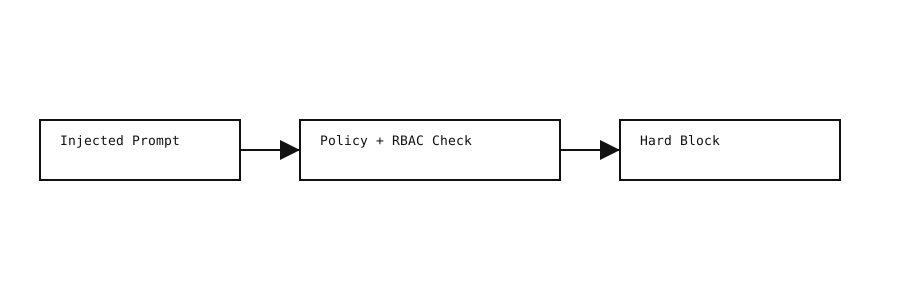
5. Prompt Injection Hard Block
Injected prompts pass through Policy + RBAC Check and result in Hard Block. Zero upstream calls permitted for policy violations.
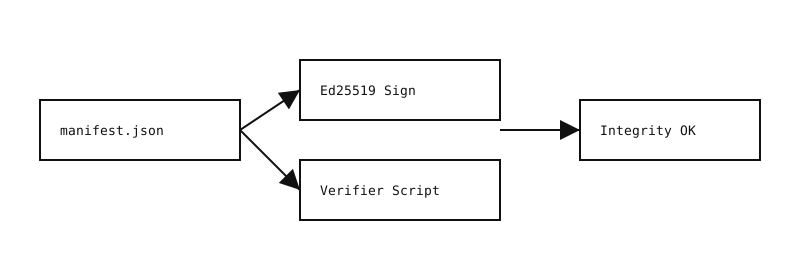
6. Signed Manifest Verification
Cryptographic identity binding of the run. manifest.json is signed with Ed25519 and verified by independent script, producing Integrity OK.
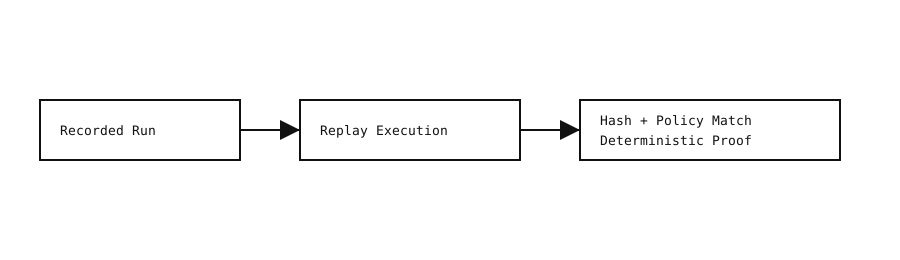
7. Deterministic Replay Verification
Independent replay correctness proof. Recorded run is replayed and produces Hash + Policy Match for deterministic proof.
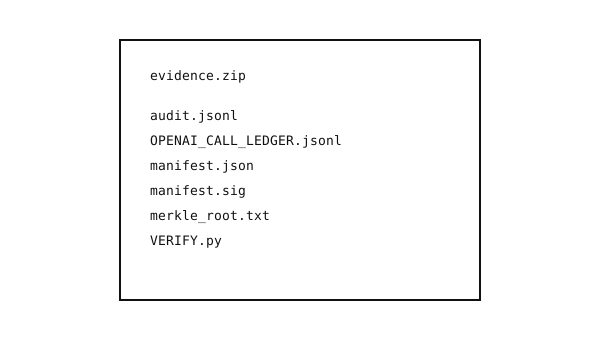
8. Evidence Pack Anatomy
Real file anatomy of the evidence pack. Contains audit.jsonl, OPENAI_CALL_LEDGER.jsonl, manifest.json, manifest.sig, merkle_root.txt, and VERIFY.py.
Verification Statement
All artifacts shown above are generated from actual TruthOS Unified E2E executions. Each artifact supports independent third-party verification without reliance on proprietary tools or operator trust.